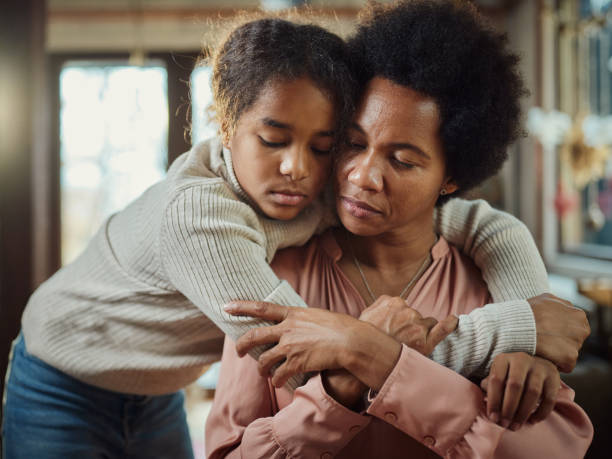
STORIES & INSIGHTS
Blog
The Mother They Called Poor
The Mother They Called Poor
They called her poor.
That was the first thing people noticed.
Not the way she held her child.
Not the way she saved the last piece of bread for her daughter.
Not the way she stayed awake at night when the child had a fever.
Not the way her eyes followed that child everywhere, as if love itself had learned how to watch.
They called her poor.
And once they called her poor, many people stopped seeing everything else.
They did not see a mother.
They saw a problem.
They did not see love.
They saw lack.
They did not see a family trying to survive.
They saw a child who could be “helped” somewhere else.
That is how many painful stories begin.
Not with hate.
Not always with cruelty.
Sometimes, they begin with people looking at poverty and mistaking it for failure.
She Loved Her Child Before Anyone Else Knew Her Name
Before any document was signed, she was the one who knew the child’s first cry.
She knew how the child slept.
She knew what made the child laugh.
She knew the little habits no paper could ever record.
She knew when the child was hungry.
She knew when the child was afraid.
She knew when the child needed to be held.
To the world, she may have looked like a struggling woman.
To the child, she was home.
That is something we must never forget.
A mother does not stop being a mother because she is poor.
A father does not stop being a father because he needs help.
A grandmother does not stop being family because she has no money.
A child does not stop belonging because their home is simple.
Poverty may make life hard.
But poverty does not erase love.
The Visit That Changed Everything
One day, strangers came.
They asked questions.
They looked around the home.
They noticed what was missing.
They noticed the old clothes.
They noticed the empty shelves.
They noticed the small room.
They noticed the tired mother.
They may have meant well.
Maybe they spoke gently.
Maybe they promised help.
Maybe they said the child would have education.
Maybe they said the child would have food.
Maybe they said the child would have a better life.
And what mother does not want a better life for her child?
That is the painful part.
Sometimes, a mother agrees because she thinks she is helping.
Sometimes, she signs because she does not understand the full meaning.
Sometimes, she is told the child will come back.
Sometimes, she is told this is temporary.
Sometimes, she is told this is the only way.
And sometimes, by the time she understands, the child is already gone.
When Poverty Becomes a Reason to Separate
This is the question we must ask:
If a family is poor, should the first answer be removal?
Or should the first answer be support?
Because many families are not unsafe.
They are unsupported.
They may need food.
They may need school fees.
They may need medical care.
They may need housing.
They may need a chance.
They may need someone to stand beside them before the system takes their child away.
That is why this conversation matters.
When we confuse poverty with neglect, we punish families for being poor.
And the child pays the deepest price.
The child loses the mother’s voice.
The child loses the father’s face.
The child loses siblings.
The child loses language.
The child loses culture.
The child loses the truth of where they came from.
People may say, “At least the child got a better life.”
And yes, maybe the child received things the first family could not provide.
But a child is not only a body to feed.
A child has a heart.
A child has memory.
A child has identity.
A child has roots.
A child has a story.
And when we remove a child without doing everything possible to protect those roots, we may create a wound that follows that child for life.
The Mother Left Behind
After the child leaves, people often stop talking about the mother.
The story moves forward without her.
The child enters a new home.
The new family receives congratulations.
Photos may be taken.
People may call it beautiful.
People may say the child is lucky.
And somewhere far away, the mother sits with empty arms.
No celebration.
No camera.
No one asking how she is breathing through the pain.
She may still wake up and reach for the child.
She may still listen for footsteps.
She may still wonder what the child ate that day.
She may still keep a small piece of clothing.
She may still whisper the child’s name in prayer.
The world may forget her.
But her body remembers.
Her heart remembers.
Her home remembers.
And the child, even if too young to explain it, may remember too.
Love Alone Is Not the Whole Story
Some people may read this and think, “But adoptive families love the child.”
Many do.
And love matters.
But love cannot replace truth.
Love cannot erase the first family.
Love cannot undo unclear consent.
Love cannot fix a system that treats poverty like abandonment.
Love cannot make a child forget where they came from.
A child can be loved in a new home and still grieve the old one.
A child can be grateful and still feel loss.
A child can smile and still wonder.
A child can succeed and still ask, “Why was I taken?”
That is why we need honest conversations.
Not angry conversations.
Not blaming conversations.
Honest ones.
Because when the truth is hidden, the child carries the confusion.
What Could Have Changed the Story?
Maybe the mother did not need to lose her child.
Maybe she needed food support for a few months.
Maybe she needed help with rent.
Maybe she needed school support.
Maybe she needed a job opportunity.
Maybe she needed medical help.
Maybe a relative could have helped if someone had asked.
Maybe the community could have stepped in.
Maybe the child could have stayed connected to family, culture, and identity.
Maybe the ending did not have to be separation.
This is why family preservation matters.
It asks a better question.
Not “Who can take this child?”
But “What can we do to help this child stay safely connected to family?”
That one question can change a life.
The Better Way Forward
Protecting children should never mean ignoring their roots.
A better system would slow down.
It would listen first.
It would ask harder questions.
Was the family fully informed?
Was the mother truly willing?
Was the child really without relatives?
Was poverty the main issue?
Was support offered before separation?
Was adoption truly the last option?
If the answer is no, then we must pause.
Because a child’s life is not something to rush.
A child’s identity is not paperwork.
A child’s family is not a small detail.
A child’s story should not be rewritten because adults were in a hurry to feel good.
The Mother Was Not the Problem
The mother they called poor was not the problem.
The problem was a world that saw her poverty before it saw her love.
The problem was a system that moved faster toward separation than support.
The problem was people who believed a child needed saving from a family that may have only needed help.
The problem was silence.
Silence around birth mothers.
Silence around poverty.
Silence around identity loss.
Silence around the pain adoptees carry.
Silence around the truth.
And silence is dangerous because it allows the same story to happen again and again.
Final Thought
Before we call a child lucky, let us ask what the child lost.
Before we call a mother unfit, let us ask what support she was denied.
Before we call adoption the answer, let us ask whether family preservation was truly tried.
Because sometimes, the most loving thing we can do for a child is not to remove them from their family.
Sometimes, the most loving thing we can do is help the family stand.
The mother they called poor may not have had much.
But she had love.
And love should never be ignored just because poverty is easier to see.

March 15,2025
Is There a Best Alternative to International Adoption?
Exploring community-based care, kinship programs, and family preservation as ethical alternatives to international adoption.
February 28,2025
How the Adoption System Can Lose Sight of the Child
When large sums of money and complex bureaucracies are involved, the child's best interest doesn't always stay at the center. A closer look at where things go wrong.
February 10,2025
Why Adoption Should Be the Last Option?
Families facing poverty need support not separation. When we invest in keeping families together, children thrive in ways that no alternative can replicate.