The Child No One Asked About
The Child No One Asked About
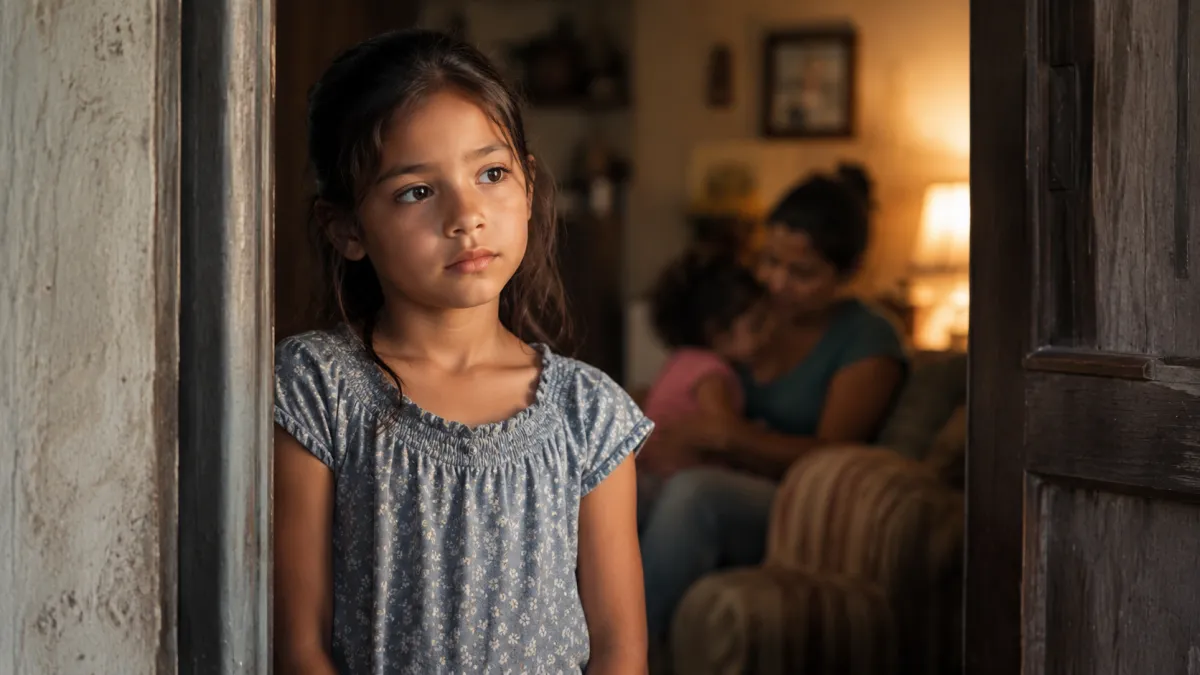
There was a little girl who used to sit quietly near the doorway every evening.
She was not the loudest child in the room. She was not the one who always cried. She was not the one people noticed first.
She had learned how to be silent.
When adults talked, she listened.
When strangers came, she lowered her eyes.
When decisions were made about her life, she was never invited into the conversation.
Everyone around her seemed to know what was best.
One person said she needed a better future.
Another said her family was too poor.
Another said adoption would save her.
Another signed papers.
Another took photographs.
Another told the story in a way that sounded beautiful.
And the little girl?
She was still waiting for someone to ask one simple question.
“What happened to your family?”
That question may sound small, yet it can change everything.
Because behind many stories of international adoption are children, mothers, fathers, relatives, and communities whose voices were never fully heard. The mission of Adoption Options is built around this truth: children are not just files, documents, or emotional rescue stories. They are human beings with roots, memories, families, and stories that deserve to be respected.
The Story We Are Usually Told
Many people hear the word “adoption” and immediately think of kindness.
They picture a child being rescued.
They picture a loving family opening their home.
They picture a beautiful ending.
And sometimes, adoption may come from a place of care.
Yet the full story is not always that simple.
What if the child was not truly abandoned?
What if the mother was poor, not careless?
What if the family needed support, not separation?
What if the people signing the papers did not fully understand that adoption was permanent?
What if the child grew up loved in another country, yet still carried a deep pain no one could explain?
These are the questions many people avoid because they are uncomfortable.
And that is exactly why they must be asked.
Adoption Options highlights that many children involved in international adoption may still have living parents or relatives, and poverty is often one of the reasons families are separated.
Poverty should never be confused with lack of love.
A mother can be poor and still love her child deeply.
A father can struggle and still want his child safe.
A grandmother can lack money and still be the child’s home.
A family can need help without needing to be broken apart.
The Moment a Child Becomes a “Case”
Imagine being a child and hearing adults talk about you like you are a problem to solve.
Not a person.
Not a daughter.
Not a son.
Not a grandchild.
Not someone with memories.
Just a case.
A file.
A number.
A child waiting for placement.
That is where the danger begins.
When a child becomes a case, people can forget to ask what the child has already lost.
A child may lose their mother.
Then their siblings.
Then their language.
Then their name.
Then their culture.
Then the truth about where they came from.
And years later, when that child becomes an adult, people may expect them to simply be grateful.
Grateful for food.
Grateful for school.
Grateful for safety.
Grateful for opportunity.
But gratitude does not erase grief.
A person can be thankful for what they gained and still mourn what they lost.
The Pain That Follows Children Into Adulthood
Some wounds do not show on the body.
A child can smile in family photos and still feel confused inside.
A child can learn a new language and still miss the sound of the first one.
A child can be loved by an adoptive family and still wonder about the mother who gave birth to them.
A child can grow into an adult and still ask, “Who am I really?”
This is why the emotional impact of adoption must be taken seriously.
Adoption Options explains that separation from family, culture, and country of origin can create lifelong emotional challenges, including identity struggles, grief, and a feeling of not fully belonging.
That kind of pain deserves compassion.
Not silence.
Not shame.
Not quick answers.
Not people saying, “At least you had a better life.”
A better life should never require losing the truth.
The Mother People Forgot
Now think about the mother.
Not the version people create in their minds.
Not the careless mother.
Not the woman who “gave up” her child without feeling.
Think about a real mother.
A mother who may have been young.
A mother who may have been poor.
A mother who may have been scared.
A mother who may have been told her child would get education and return someday.
A mother who may not have understood that adoption meant forever.
What happens to that mother after the child is gone?
People move on.
The papers are filed.
The child is taken.
The story is shared somewhere else.
The system continues.
But the mother remembers.
She remembers the child’s face.
She remembers the last day.
She remembers the sound of crying.
She remembers the silence after.
For many birth families, the pain does not end when the child leaves.
It begins there.
Good Intentions Are Not Enough
This is where the conversation becomes difficult.
Because many people involved in adoption may believe they are doing good.
And good intentions matter.
But good intentions do not protect a child from harm if the system is broken.
Good intentions do not fix false documents.
Good intentions do not replace informed consent.
Good intentions do not heal identity loss.
Good intentions do not bring back years stolen from a family.
Good intentions do not make silence safe.
Adoption Options states that corruption can hide behind good intentions, including falsified documents, unclear consent, emotional trauma, and financial incentives that may place the system above a child’s true needs.
That is why awareness matters.
Not to attack every adoptive parent.
Not to shame every person who cares about children.
Not to turn pain into blame.
Awareness matters because children deserve better.
What If We Helped Before We Removed?
There is a question every society should ask before separating a child from family:
“Have we done everything possible to keep this child safely connected to their roots?”
Not everything easy.
Not everything convenient.
Not everything that looks good on paper.
Everything possible.
Could the mother receive support?
Could relatives care for the child?
Could the community help?
Could school fees be covered?
Could food, housing, or medical care prevent separation?
Could family preservation be the first option instead of the forgotten option?
Because sometimes, the solution is not to move the child across the world.
Sometimes, the solution is to help the family survive.
Adoption Options promotes a better way forward through family preservation, kinship support, community care, education, healthcare, and economic resources so families can stay together when it is safe and possible.
That message is simple.
Children need protection.
And often, protecting children starts with protecting their family bonds.
The Question That Changes Everything
Before we celebrate an adoption story, we should ask:
Was the child truly without family?
Was the family fully informed?
Was consent clear?
Was poverty treated like abandonment?
Were relatives searched for?
Was the child’s culture respected?
Was the child’s voice considered?
Was adoption truly the last option?
These questions do not make someone heartless.
They make someone responsible.
Because the child at the center of the story is not a symbol.
The child is not content.
The child is not a charity photo.
The child is not proof of someone else’s kindness.
The child is a full human being.
A child with a past.
A child with a name.
A child with a family story.
A child with a voice.
And that voice matters.
Why This Conversation Must Continue
Some people may feel uncomfortable reading this.
That is understandable.
It is easier to believe every adoption story is beautiful.
It is easier to believe every child was unwanted.
It is easier to believe every document told the truth.
It is easier to believe love alone fixes everything.
But children do not need easy stories.
They need honest ones.
The world must learn to slow down before calling separation a rescue.
We must stop treating poverty like failure.
We must stop ignoring birth families.
We must stop silencing adoptees.
We must stop praising systems without asking who they hurt.
We must stop speaking for children while refusing to listen to them.
A child’s story should never be rewritten to make adults feel comfortable.
The Child Is Still Waiting
Let us return to the little girl near the doorway.
The one who stayed quiet.
Maybe she grew up.
Maybe she moved far away.
Maybe she learned a new language.
Maybe she became successful.
Maybe people called her lucky.
But deep inside, she may still be asking:
Where did I come from?
Who did I lose?
Did my mother love me?
Was I really abandoned?
Why did no one tell me the truth?
That is why this work matters.
Because somewhere, there is still a child waiting for someone to listen.
Not just to the paper.
Not just to the system.
Not just to the adults.
Not just to the version that sounds good.
To the child.
To the mother.
To the family.
To the truth.
In Conclusion
Every child deserves safety.
Every child deserves love.
Every child deserves protection.
And every child deserves the truth about their own life.
Before adoption is praised, promoted, or processed, we must ask the harder question:
Are we truly protecting the child, or are we only completing a system?
Because protecting children does not begin with taking them away.
It begins with listening.
It begins with truth.
It begins with family preservation whenever possible.
It begins when we finally look at the child and ask:
“What is your story?”
