The Hidden Truth About International Adoption No One Talks About
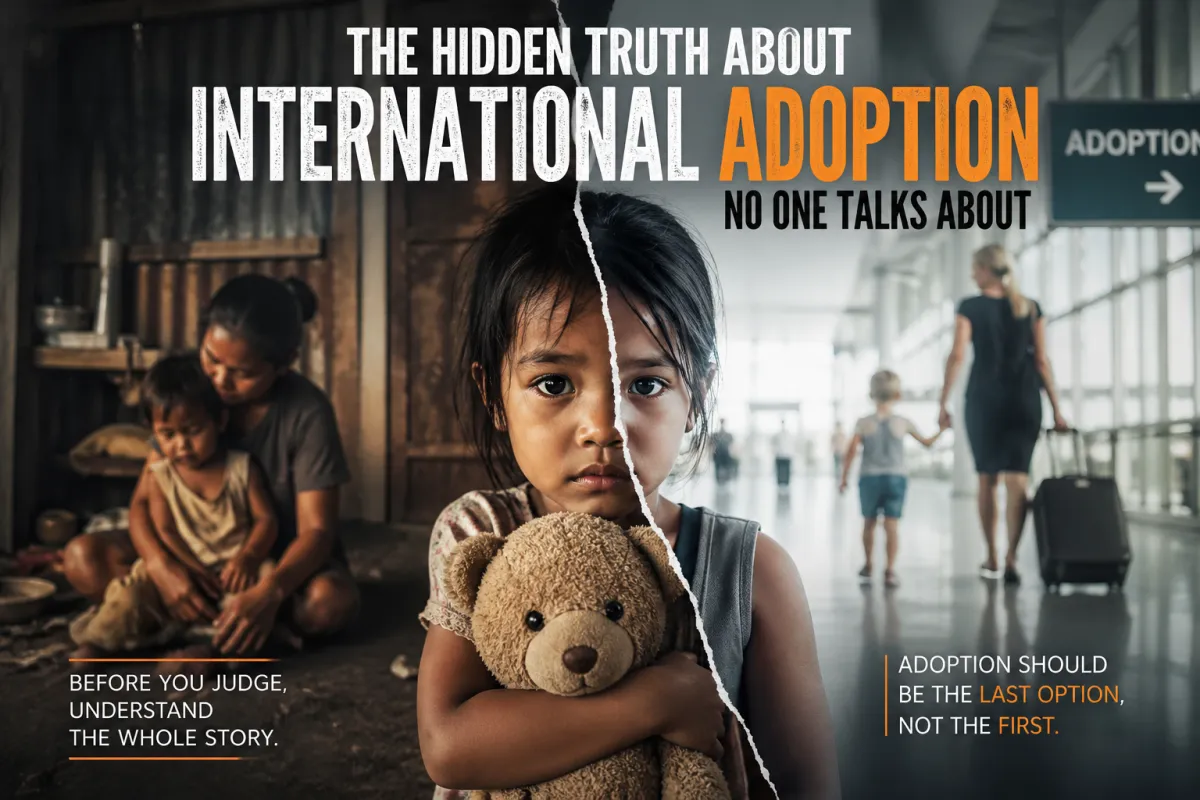
The Hidden Truth About International Adoption No One Talks About
When most people hear the word adoption, they think of hope. They picture a child finding a loving home. They imagine a better future. For many, adoption feels like an act of kindness.
But there is another side to this story that rarely gets attention.
Behind the polished images and emotional narratives, there are uncomfortable truths about international adoption that many people never hear. These truths are not easy to talk about. They challenge what we have been told for years. Yet ignoring them does not make them disappear.
If we truly care about children, we need to be willing to look deeper.
The Story We Are Told
Adoption is often presented as a simple solution. A child is in need. A family is ready to help. The outcome seems clear and positive.
This story is powerful. It is also incomplete.
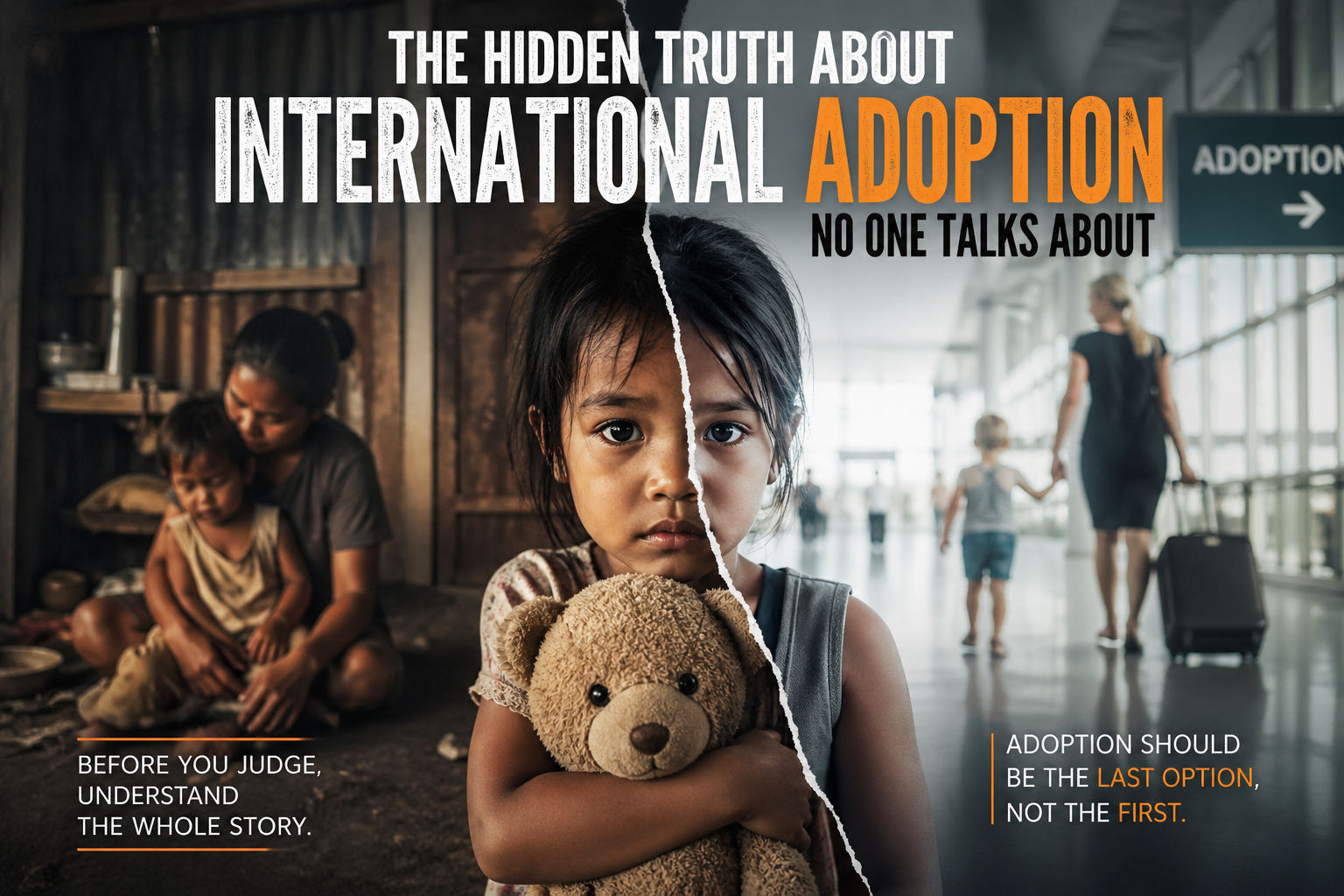
In reality, many children who enter the international adoption system are not orphans in the way people assume. Some have living parents. Some have extended family. Some were separated due to poverty, not because they had no one.
When adoption is treated as the first option instead of the last, families can be broken apart in ways that could have been prevented.
Poverty Is Not the Same as Orphanhood
One of the biggest misunderstandings in international adoption is the link between poverty and abandonment.
In many countries, families struggle with limited resources. They may lack access to healthcare, education, or stable income. These challenges can create situations where parents feel they have no choice but to give up their children.
But poverty does not mean a lack of love.
In many cases, with the right support, these families could stay together. Financial assistance, community programs, and local resources can make a huge difference. Yet instead of investing in family preservation, systems sometimes move children into adoption pipelines.
This raises an important question. Are we solving the real problem or just responding to the outcome?
The Demand Behind the System
International adoption does not exist in isolation. It is shaped by demand.
There are many families around the world who want to adopt. Their intentions may be genuine. They want to help. They want to build a family. But when demand is high, systems can become vulnerable to pressure.
In some cases, this pressure leads to unethical practices.
There have been reports of falsified documents. Children labeled as orphans when they were not. Birth parents misled about what adoption means. In extreme cases, there have even been instances of child trafficking connected to adoption networks.
These are not just isolated incidents. They point to deeper structural issues that cannot be ignored.
The Silence Around Birth Families
One of the most overlooked parts of the adoption conversation is the voice of birth families.
What happens to parents after their children are taken or placed for adoption?
Many carry long-term grief. Some were not fully informed. Others were promised contact that never happened. Some never see their children again.
Their stories rarely make headlines. They are often missing from the narrative.
If adoption is truly about helping children, then the experiences of their original families should matter too.
The Impact on Adoptees
Adoption does not end when a child arrives in a new home. It is the beginning of a lifelong journey.
For some adoptees, the experience is positive. They find stability and care. They build strong relationships.
For others, the story is more complex.
Identity can become a struggle. Questions about origin, culture, and belonging can surface over time. Some adoptees grow up without access to their history. Others discover later in life that their adoption was built on incomplete or false information.
There are also emotional layers that are not always visible. Loss, confusion, and a sense of disconnection can exist alongside gratitude.
These experiences deserve attention. They remind us that adoption is not a simple fix. It carries long-term consequences.
When Systems Fail
International adoption systems are meant to protect children. But like any system, they are not perfect.
Weak regulations, lack of oversight, and financial incentives can create gaps. In those gaps, vulnerable families and children can be exploited.
Some countries have taken steps to reform their processes. Others have paused or stopped international adoption due to concerns about corruption and abuse.
These actions highlight a growing recognition that something needs to change.
Why “Last Option” Matters
The idea that adoption should be the last option is not about rejecting adoption completely. It is about prioritizing what is best for the child.
Before adoption is considered, every effort should be made to keep families together. This includes:
Supporting parents with resources
Strengthening local communities
Exploring kinship care within extended families
Ensuring transparency in every step
When these options are overlooked, adoption can become a shortcut instead of a solution.
The Role of Awareness
Change starts with awareness.
Many people support adoption because they believe they are helping. They are not aware of the deeper issues within the system. Once they learn more, their perspective often shifts.
Awareness does not mean judgment. It means understanding the full picture.
It means asking questions that are not always comfortable.
It means recognizing that good intentions do not always lead to good outcomes.
What Can Be Done
If we want to protect children, we need to focus on solutions that address root causes.
This includes:
Investing in family preservation programs
Supporting ethical standards in adoption processes
Listening to adoptees and birth families
Promoting transparency and accountability
Encouraging policies that prioritize child welfare over demand
These steps may not be as simple as adoption itself, but they are essential for long-term change.
A Different Way to Think About Help
Helping children should not start with separation. It should start with support.
When families are given the tools they need, many can stay together. When communities are strengthened, fewer children enter vulnerable situations.
Adoption has a place. But it should come after every other safe option has been explored.
This approach respects both the child and the family.
The conversation around international adoption is changing. More people are beginning to ask questions. More voices are being heard.
This is not about attacking adoption. It is about understanding it fully.
It is about recognizing that behind every adoption story, there is more than one perspective.
If we truly care about children, we have to care about the truth. Even when it is difficult. Even when it challenges what we have always believed.
Because real change does not come from ignoring problems. It comes from facing them.
